
This page contains affiliate links. If you buy through them, we may earn a commission at no additional cost to you. Read our affiliate disclosure.
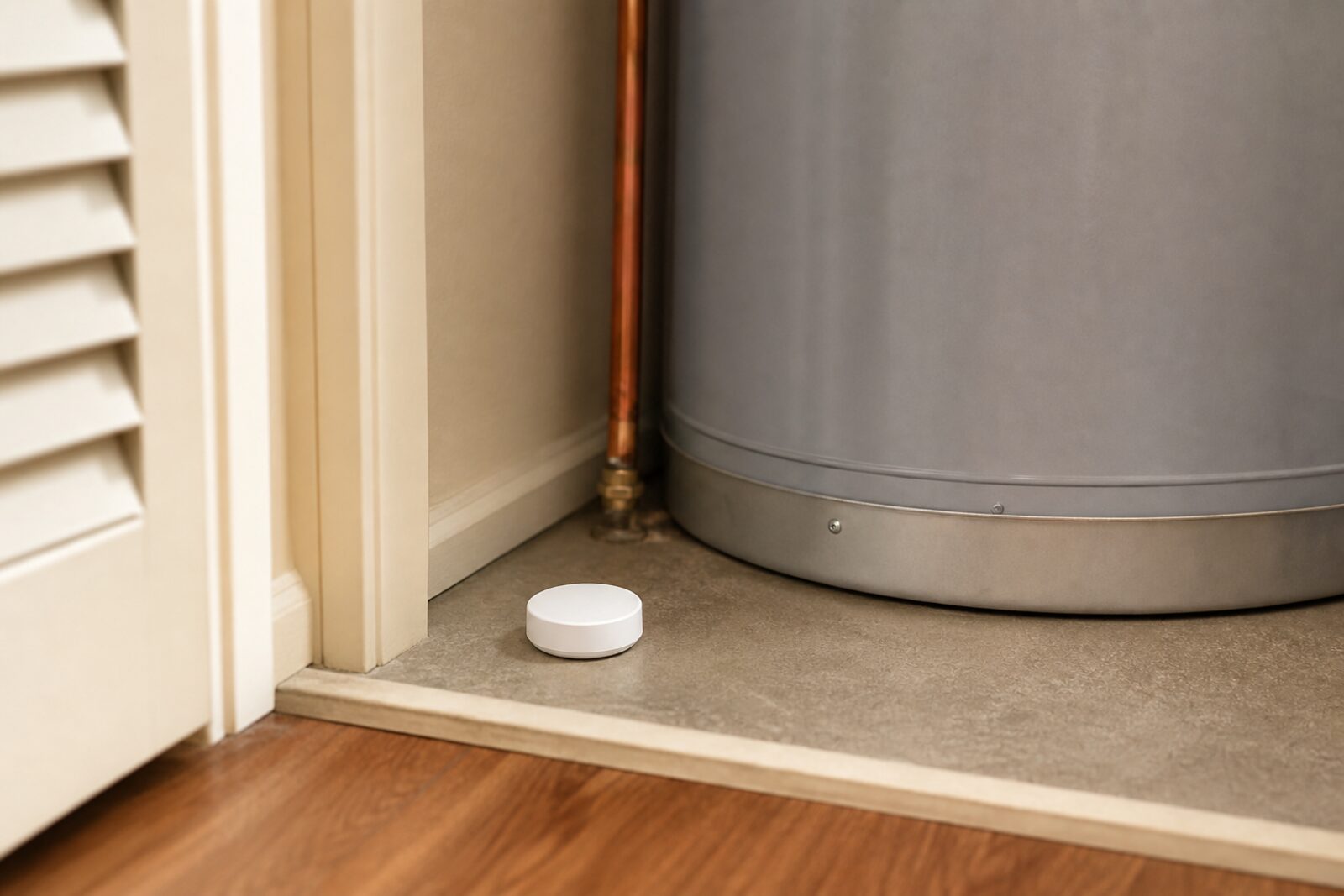
A water heater doesn't usually announce itself before it fails. It just lets go one morning while everyone's at work, and by the time someone gets home there's standing water in three rooms and an insurance claim ahead. Smart leak detectors close that gap. Some are small battery-powered sensors placed near a water heater or under a sink that ping your phone the instant they get wet. Others are whole-home monitors that watch water flow and can shut the main line off before a drip becomes a flood. Below, five widely available systems for a US home in 2026.
- Moen Flo Smart Water Monitor and Shutoff — Best Overall
- Govee WiFi Water Sensor 3-Pack — Best Budget
- YoLink Smart Leak Sensor Kit — Best Long-Range Coverage
- Flume 2 Smart Water Monitor — Best for Catching Hidden Leaks
- Ring Alarm Flood & Freeze Sensor — Best for Ring and Alexa Households
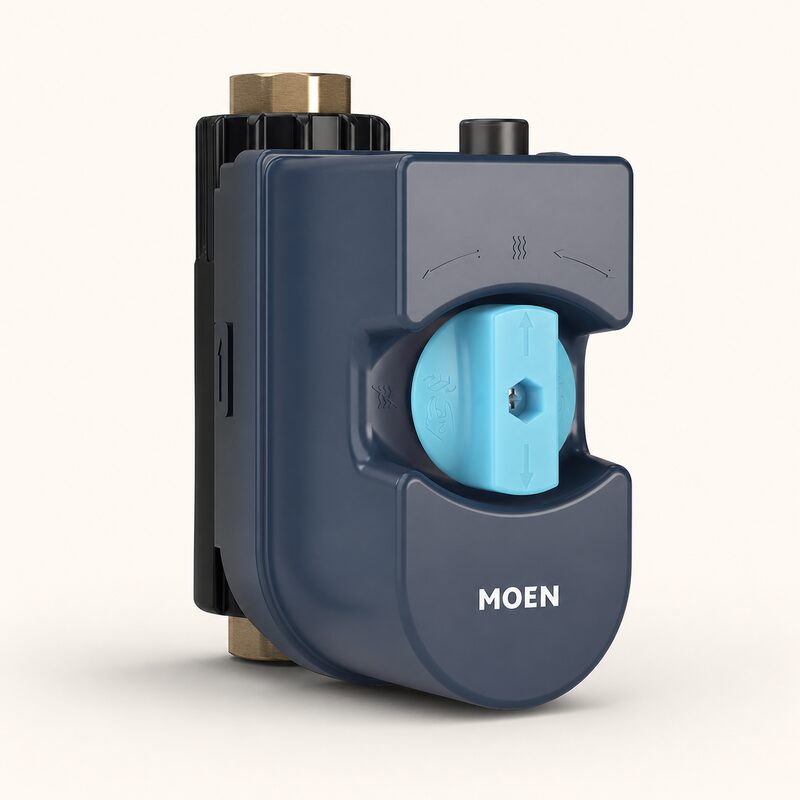
Moen Flo Smart Water Monitor and Shutoff
The Flo by Moen is the product most plumbers point to for whole-home protection rather than a single spot sensor. It installs on the main water line and monitors pressure, flow, and temperature continuously. When it detects a pattern consistent with a leak — a toilet running non-stop or a full burst pipe — it can shut off the water supply automatically before anyone is home to react.
Because it sits on the main line, installation is a plumbing job; most owners hire a plumber or use Moen's network of installers. Once in, it connects over WiFi, sends app alerts, and runs its own overnight leak test by briefly pressurizing the line. Price runs roughly $450–$550 before installation labor.
- Automatically shuts off the water main, not just an alert
- Monitors the entire home's plumbing, not just a sensor's location
- Some insurers offer discounts for homes with an installed whole-home shutoff
- Requires professional installation on the main line, adding real cost beyond the device
- A false positive can shut off water to the whole house, an occasional annoyance owner reviews mention during heavy simultaneous use
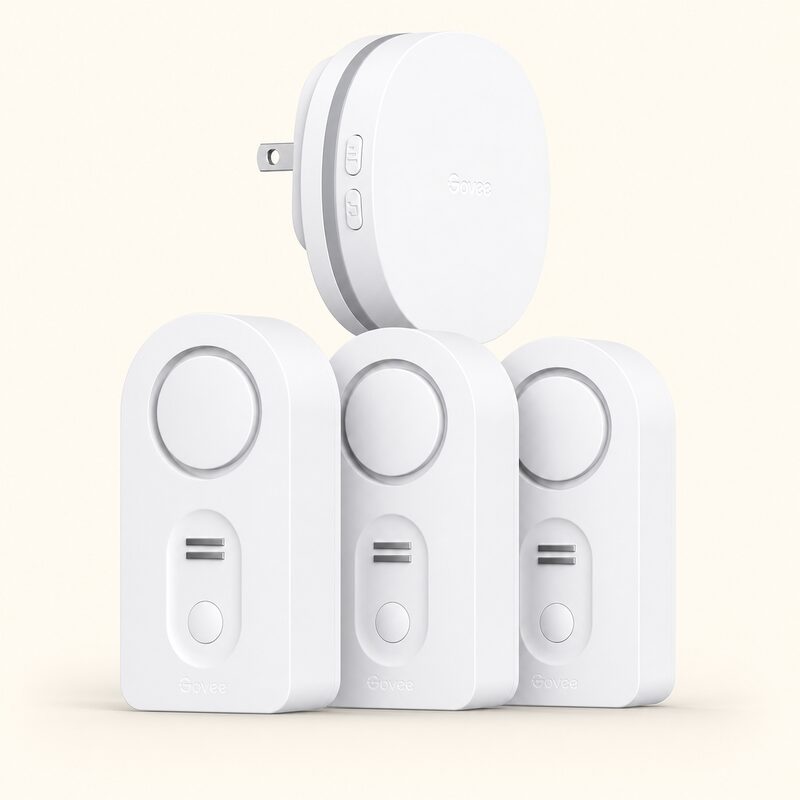
Govee WiFi Water Sensor 3-Pack
Govee's sensor is the simplest entry here: a small battery-powered puck with two metal probes that trips an alarm the instant they touch water. It connects straight to home WiFi with no separate hub, so setup takes a few minutes per sensor. Three sensors comfortably cover a water heater, a washing machine pan, and an under-sink area for well under $50 total in most listings.
The tradeoff for going hub-free is range: owner reviews consistently report weaker connectivity in basements or behind concrete. The local alarm is loud and useful if someone's home, but there's no cellular backup — if internet goes down during a storm, so does the push alert.
- Very low cost per sensor, easy to place several around a home
- No hub needed — connects directly to WiFi in minutes
- No shutoff capability — it only alerts, it doesn't stop the water
- WiFi-direct design means weaker signal reach into basements than hub-based systems
- No cellular backup if home internet or power goes out
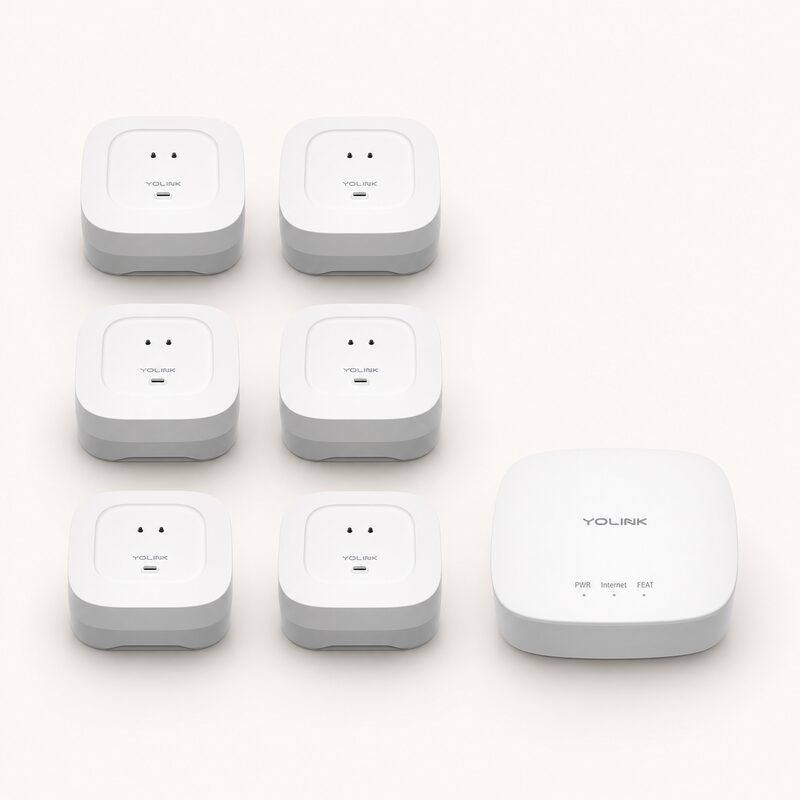
YoLink Smart Leak Sensor Kit
YoLink takes a different approach: each sensor talks to a central hub over a long-range wireless protocol, which owner reviews and the manufacturer put at roughly a quarter-mile of open-air range. That means it shrugs off basement and detached-garage dead zones that trip up WiFi-only sensors, since only the hub needs a solid internet connection.
Setup means plugging in the hub near the router, then pairing each battery-powered sensor through the app. Kits are commonly sold with multiple sensors bundled, and more can be added later to cover a sump pump or detached shed. Like Govee's, YoLink's sensors are alert-only, though a separate shutoff valve accessory can be paired to the same hub later.
- Long wireless range, a strong fit for larger homes or weak-WiFi spots
- Hub-based system supports adding more sensors over time
- Requires buying and maintaining a separate hub, another point of failure
- Base kit does not include shutoff — that's an added purchase
- Smart-home integration is narrower than bigger-name brands
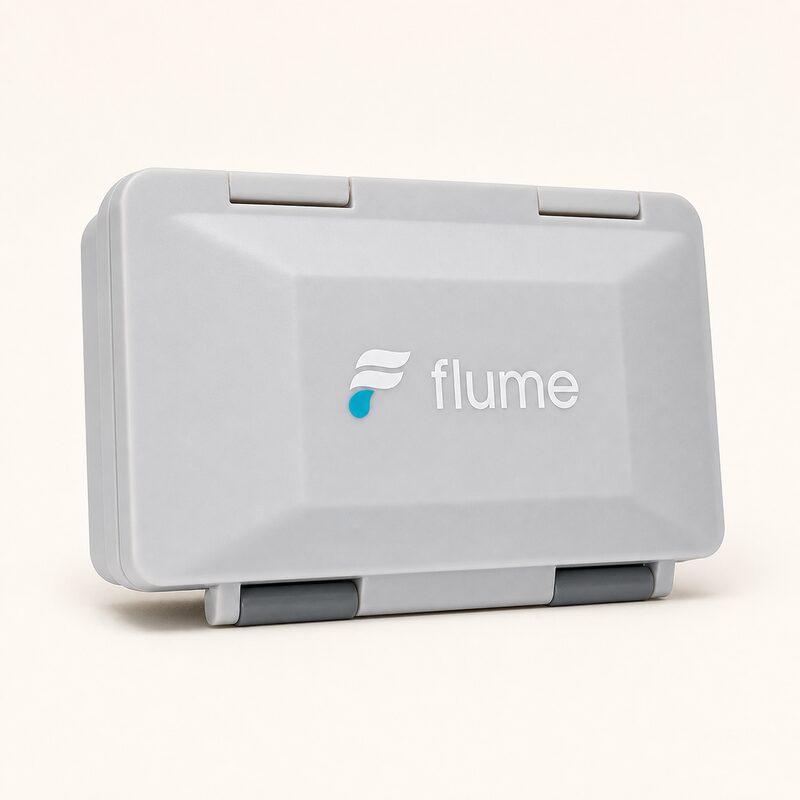
Flume 2 Smart Water Monitor
Flume 2 skips spot sensors entirely and straps onto the outside of a home's water meter to read flow without any plumbing work — one of the few devices here a renter can install solo, in a 15–20 minute job with a strap and a bridge that plugs into WiFi. The app flags continuous flow that doesn't match normal usage, exactly the signature of a running toilet or a pinhole leak inside a wall that a spot sensor would never see.
Because Flume reads total household flow rather than shutting anything off, it's a monitoring layer best paired with a spot sensor or a shutoff valve. Compatibility depends on meter type, so Flume's fit checker should be used before buying. Price is typically $150–$200 with no subscription required for core alerts.
- No plumbing work — clips onto the existing water meter
- Detects slow, hidden leaks that never reach a spot sensor
- No automatic shutoff — it alerts, someone still has to act on it
- Meter compatibility varies, and some setups won't work with the strap sensor
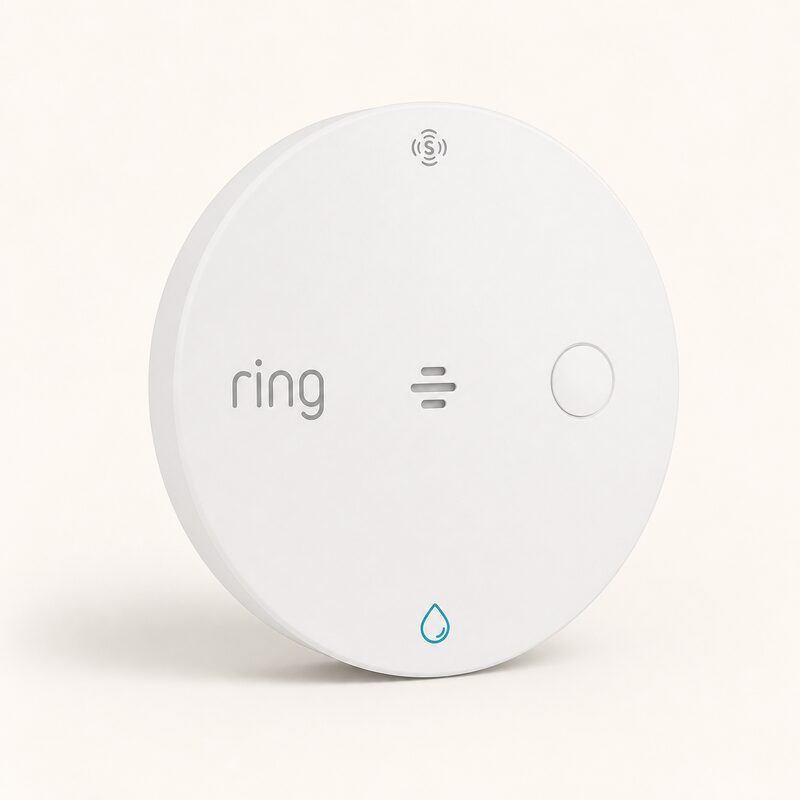
Ring Alarm Flood & Freeze Sensor
For a household that already runs a Ring Alarm base station, this is the low-friction option: a battery-powered sensor that pairs into the existing Ring network rather than requiring a separate app or hub. It reports both water contact and ambient temperature, flagging a cold basement at risk of a frozen, bursting pipe — a use case the other sensors here don't cover.
Setup is quick for anyone already inside the Ring app, and alerts arrive alongside existing security notifications. The tradeoff: it needs an existing Ring Alarm base station to function, so a household without Ring gear would be buying into the broader ecosystem just for this sensor. Like other spot sensors here, it can't shut off water.
- Doubles as a freeze sensor, flagging pipe-burst risk from cold as well as leaks
- Integrates cleanly into an existing Ring Alarm and Alexa setup
- Requires an existing Ring Alarm base station — not a standalone purchase
- No automatic water shutoff, alert-only like most spot sensors
How to choose a leak detection setup
Where leaks actually start
Insurance claim data and plumber call logs point to the same culprits repeatedly: water heaters past 8–10 years old, washing machine supply hoses, supply lines under sinks, dishwashers, and sump pumps that fail during heavy rain. A useful sensor layout starts at these points rather than being scattered randomly.
Spot sensors vs. flow monitors vs. automatic shutoff valves
Spot sensors (Govee, YoLink, Ring) only know about water once it physically touches them — great for high-risk points but blind elsewhere. Flow monitors (Flume) watch total water use and can catch a hidden leak anywhere on the property, but don't pinpoint the location. Automatic shutoff systems (Moen Flo) can physically stop the water, which matters most for a burst pipe while no one is home. Many owners layer these — spot sensors at high-risk points plus a flow monitor or shutoff for whole-home coverage.
Smart-home ecosystem fit
A household already invested in Ring or Alexa will get a smoother experience with a sensor built for that ecosystem. A household with no smart-home gear is better served starting with a standalone WiFi sensor or hub-based kit.
Insurance considerations
Some insurers offer premium discounts for homes with an installed leak detection or shutoff system, particularly whole-home devices like Flo. Discounts vary by insurer and state, so it's worth a direct call to an agent before assuming one applies.
Frequently asked questions
Do I need a whole-home shutoff system, or are spot sensors enough?
It depends on whether anyone is usually home. Spot sensors alert fast, but someone still has to act — turn off the main valve, call a plumber. A shutoff system like Moen Flo removes that dependency by cutting water automatically, which matters most for homes frequently empty during the day or during travel.
Can these sensors replace homeowners insurance or a plumber inspection?
No. Leak sensors reduce the time between a leak starting and someone finding out, limiting damage, but they don't prevent aging pipes or water heaters from failing in the first place. Periodic plumbing inspection, especially for water heaters over eight years old, still matters.
Will a WiFi-based sensor work in my basement?
It depends on signal strength at that spot. Owner reviews for WiFi-direct sensors like Govee's consistently mention weaker connectivity behind concrete or metal, while hub-based systems like YoLink are built to handle those distances better since only the hub needs a strong connection.
What happens if my WiFi goes out during a storm — will I still get an alert?
For most WiFi-dependent sensors, no — if the home's internet drops, so does the push notification, though a local audible alarm may still sound. This is worth factoring in for storm-prone areas, and it's why some owners pair a local-alarm sensor with a monitored system for redundancy. Most of these products otherwise work with core leak alerts at no ongoing subscription cost, though a few, like Flume, offer an optional paid tier for extended history.
Bottom line
For most homeowners who want real protection rather than just a warning, the Moen Flo Smart Water Monitor and Shutoff is the strongest overall pick — it's the only system here that can actually stop a leak in progress, not just report it. Budget-conscious buyers mainly wanting alerts at a few high-risk points will do well with the Govee 3-pack, and anyone with a larger home or an existing Ring setup should lean toward YoLink or the Ring Flood & Freeze Sensor. Whichever route fits the budget, the real upgrade over doing nothing is simple: something in the house that notices water where it shouldn't be, long before a person does.
Our rankings and editorial scores consider product specifications, aggregated owner feedback, availability, drawbacks, and commercial relationships. Compensation may affect inclusion or ordering; scores are our own assessments and are not Amazon or customer ratings. Commercial relationships do not permit unsupported product claims. Read more about how we review.