
This page contains affiliate links. If you buy through them, we may earn a commission at no additional cost to you. Read our affiliate disclosure.
Droppings in the pantry, a shredded cereal box, scratching in the wall after dark — once mice move in, they don't leave on their own. This guide compares seven widely sold traps across every major style — wood snap, upgraded plastic snap, no-touch, glue, electronic, live-catch, and a bait station — based on design, owner reviews, and pest-control guidance on placement and bait.
- Victor M325 Metal Pedal Mouse Trap — Best Overall
- Victor Power-Kill Mouse Trap — Best Upgrade Snap Trap
- Tomcat Press 'N Set Mouse Trap — Best No-Touch Snap Trap
- Catchmaster Mouse & Insect Glue Boards — Best for Tight Spaces
- Victor Electronic Mouse Trap (M250) — Best Electronic Trap
- Victor Tin Cat Multi-Catch Trap — Best Humane Option
- Tomcat Refillable Bait Station — Best for Long-Term Prevention
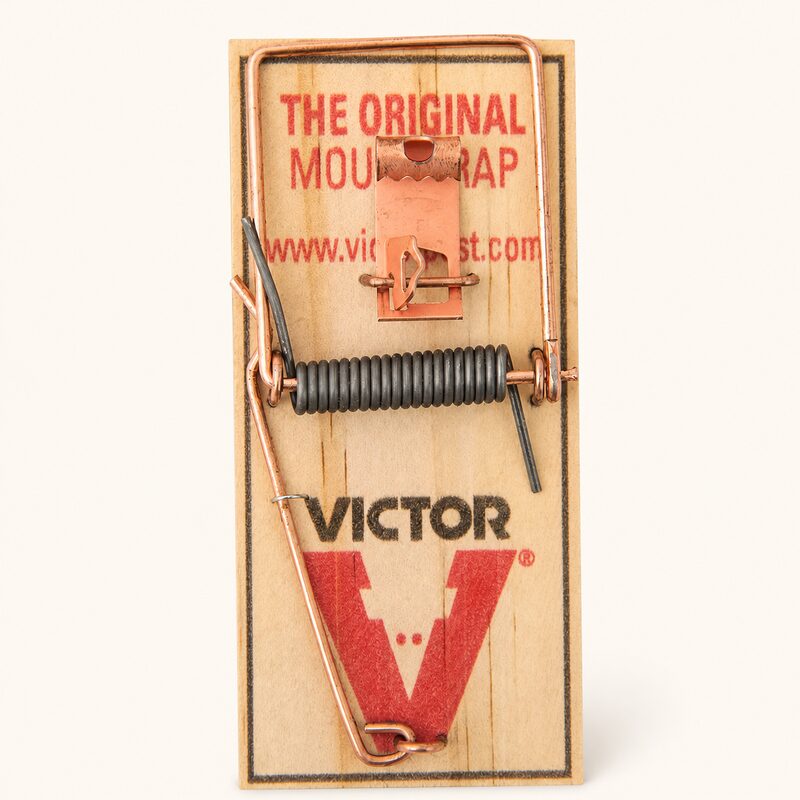
Victor M325 Metal Pedal Mouse Trap
The M325 is the modern take on the classic wood-and-spring snap trap: wooden base, metal pedal, heavy kill bar. It sells in multi-packs for around a dollar or two per trap, cheap enough to line an entire baseboard. Set it perpendicular to the wall, trigger facing the runway. Owner reviews rate the metal pedal as more reliable than all-plastic triggers, which can stick once greasy. It's reusable almost indefinitely, but resetting and disposal both mean handling it directly.
- Very low cost per trap, easy to buy in bulk
- Metal pedal resists sticking better than plastic versions
- Reusable indefinitely if kept clean and dry
- Requires direct handling to set, reset, and dispose of the catch
- Wood base can warp or hold odor in a damp crawlspace
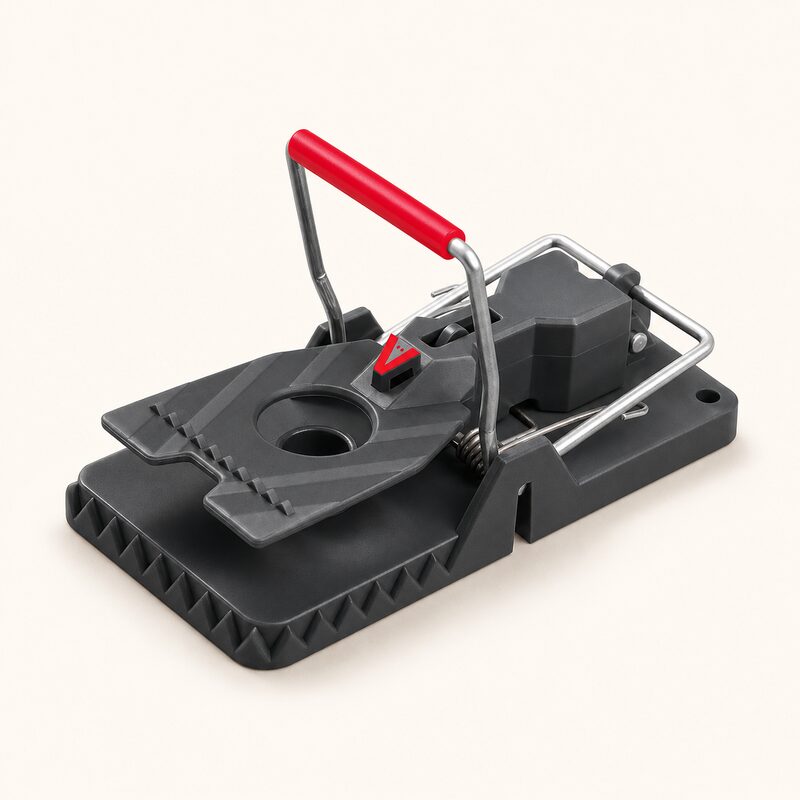
Victor Power-Kill Mouse Trap
The Power-Kill is Victor's higher-force plastic snap trap, built for households where mice have triggered a basic trap and escaped. A stiffer spring and wider kill bar back a molded bait cup that holds soft bait better than a flat pedal. It costs a few dollars per trap and wipes clean for reuse. The stronger spring is the whole point and the top complaint: it's harder to set with bare fingers, and some owners mention pinched fingers before getting used to the tension.
- Stronger spring reduces the chance a mouse triggers it and escapes
- Molded bait cup holds soft bait better than a metal pedal
- Wipes clean for reuse instead of absorbing odor
- Higher tension makes it harder and slower to set safely
- Costs noticeably more per trap than basic wood snap traps
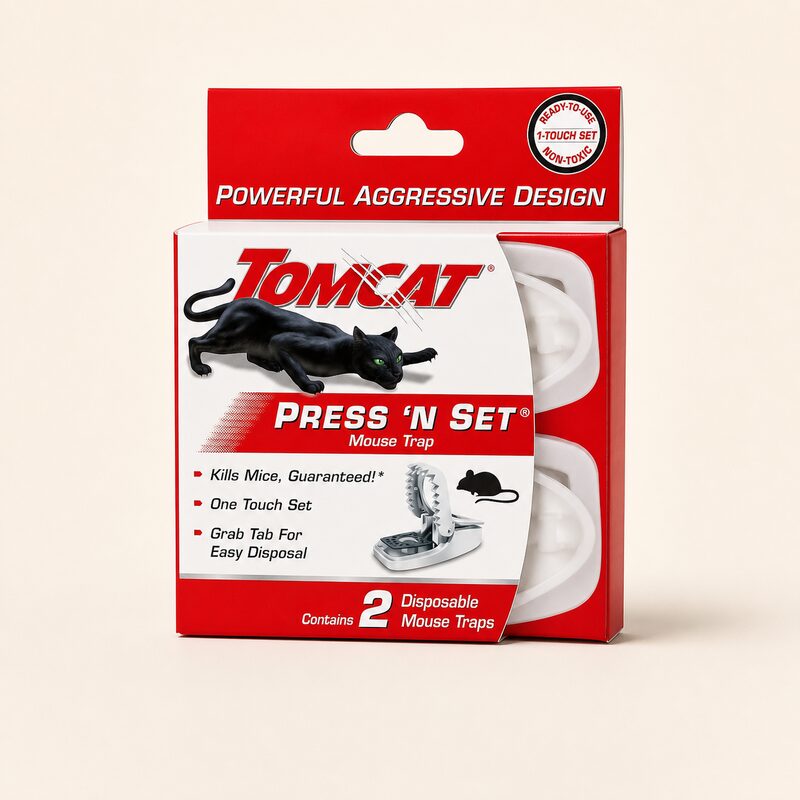
Tomcat Press 'N Set Mouse Trap
Built for anyone who doesn't want to get near a spring trigger or the mouse afterward, the Press 'N Set arms by pressing two plastic tabs rather than a manual bail bar, with a shield keeping fingers clear. Disposal works by holding the trap over a trash bag and pressing a release tab, so the mouse is never handled directly. It sells at a modest premium over basic plastic traps. Reviews are positive on the no-touch experience, though several note the release mechanism can be stiff and needs a firm shake to drop the mouse.
- No-touch setting shields fingers from the trigger
- No-touch disposal avoids handling the mouse directly
- Reusable after a quick wipe-down
- Release mechanism can need a firm shake to eject the mouse
- Bulkier than a basic snap trap, harder to fit into narrow gaps
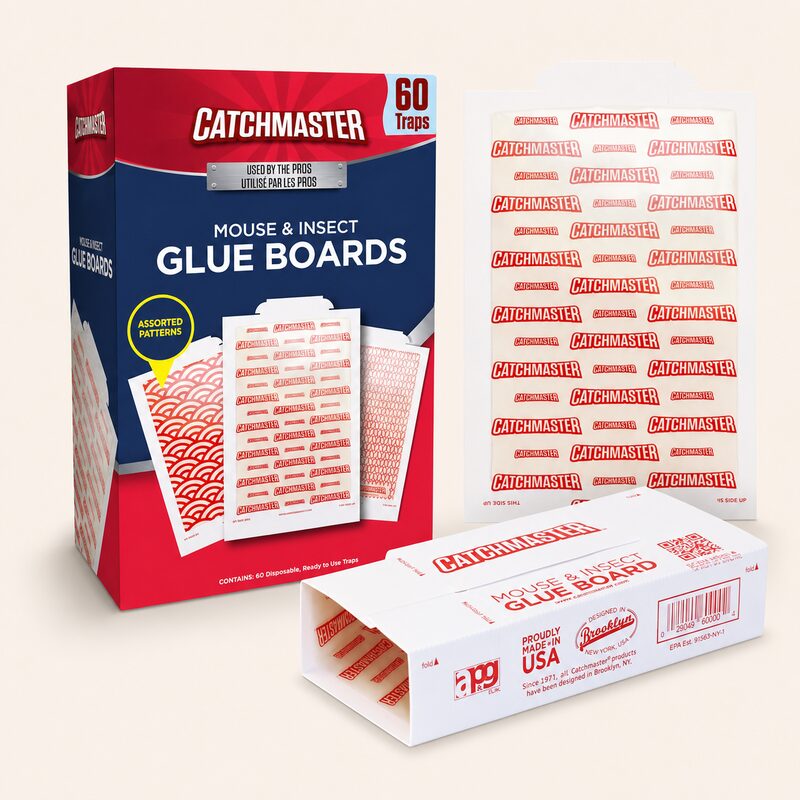
Catchmaster Mouse & Insect Glue Boards
Catchmaster's boards are flat cardboard trays coated in strong adhesive, cheap enough to line an entire attic. With no mechanism to set, they fit gaps a snap or electronic trap can't reach, which is why technicians often use them to find entry points even when another method handles the kill. The honest downside: a mouse on a glue board doesn't die immediately and can struggle first. Animal welfare groups and many pest professionals consider glue traps among the least humane options — treating one as a monitoring tool, not a primary kill method, is the more defensible use.
- Thin profile fits spaces no snap or electronic trap can reach
- Cheap enough to deploy in bulk for monitoring a room or attic
- No mechanism to set, no bait required in most versions
- Widely criticized as inhumane since the mouse doesn't die quickly
- Loses stickiness in dusty or humid spots, reducing effectiveness
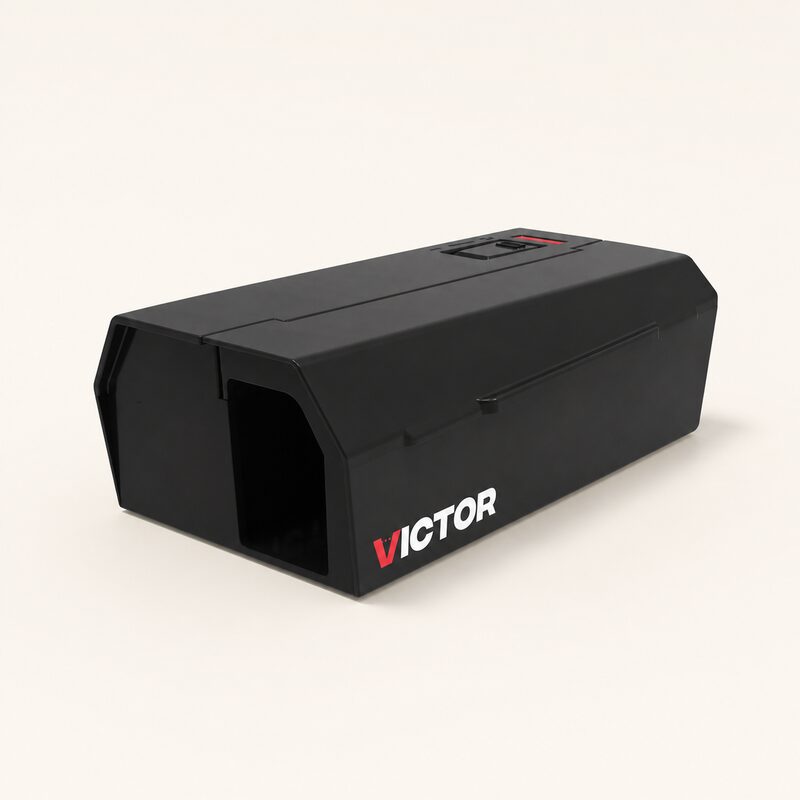
Victor Electronic Mouse Trap (M250)
This trap lures a mouse into an enclosed chamber baited at the back, then delivers a high-voltage shock across internal plates on contact, powered by AA batteries. A light indicates a catch, so there's no need to open the unit to check. It costs well above any snap trap, but the enclosed design means no direct contact — most versions empty by holding the chamber over a trash can. Reviews praise the fast kill and mess-free disposal; complaints center on battery life in cold garages and the higher upfront cost.
- Enclosed design keeps the kill mechanism out of reach of pets
- No direct handling required at setting or disposal
- Reusable for many catches on one set of batteries
- Significantly more expensive per unit than snap or glue traps
- Battery performance drops in cold storage spaces, exactly where mice are common
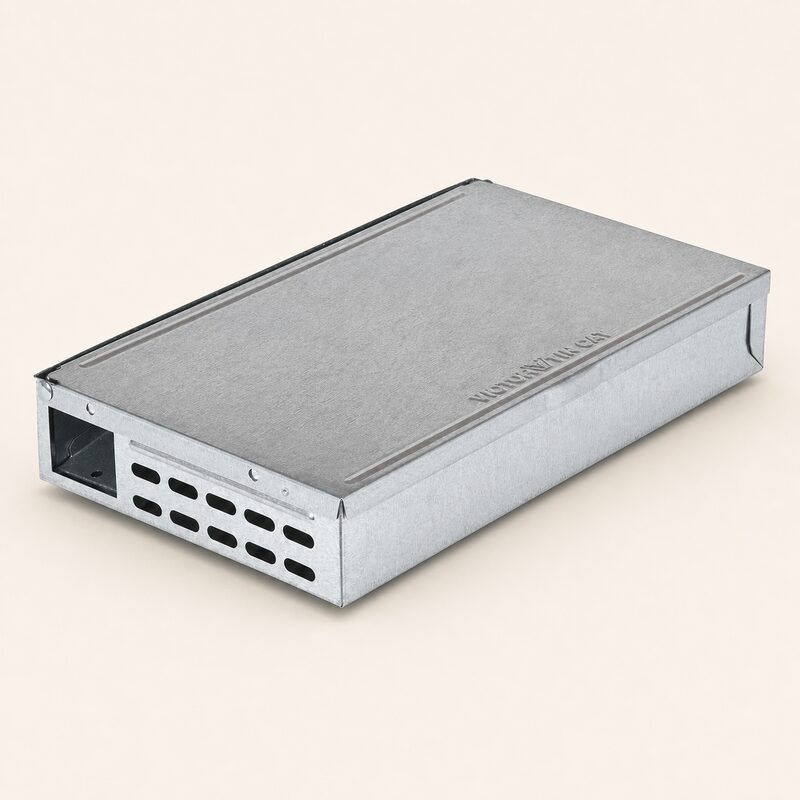
Victor Tin Cat Multi-Catch Live Trap
The Tin Cat is a metal box with a one-way rocking door: a mouse follows bait scent in, its weight tips the platform, and the door swings shut behind it. Nothing inside kills it, and the box holds multiple mice before it needs emptying. It's reusable indefinitely and needs no batteries, but priced closer to the electronic trap than a snap trap. Because it's a live trap, the responsibility shifts to checking it daily — a mouse left too long without food or water can still die of stress — and releasing it means relocating it a real distance away, or the same mouse just comes back.
- No killing mechanism, appealing for a non-lethal approach
- Multi-catch design holds several mice before needing to be emptied
- Durable metal build with no batteries needed
- Must be checked daily or mice can die of stress anyway
- Requires relocating mice a real distance away to prevent re-entry
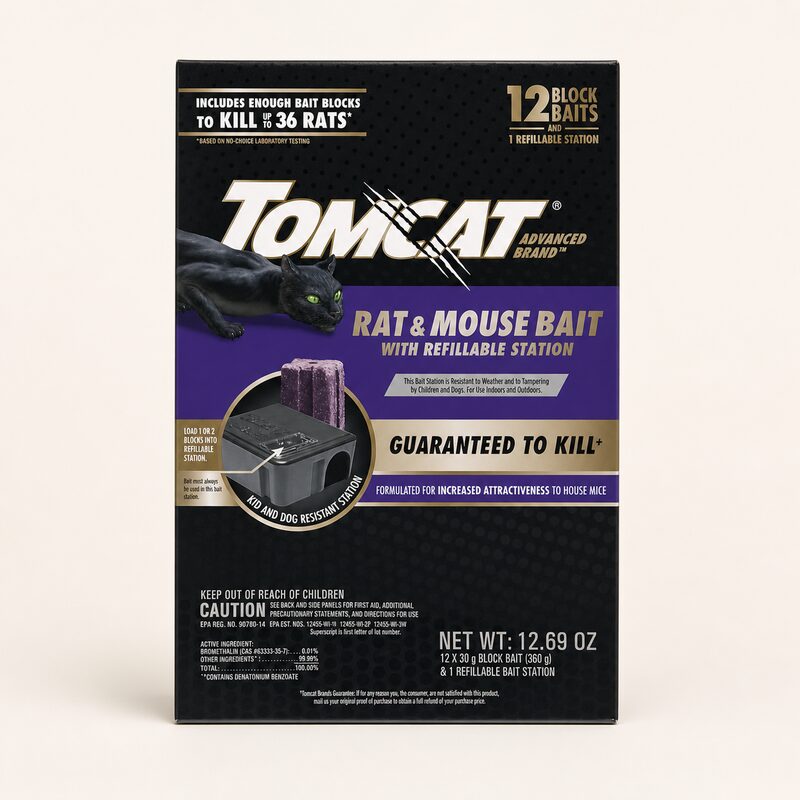
Tomcat Refillable Bait Station
Worth being direct: this isn't a trap. It's a locked plastic housing holding rodenticide bait blocks, placed along an exterior wall or garage as an ongoing barrier — mice enter, eat, and leave, with the kill happening later out of sight. It's sold refillable, priced near a mid-range electronic trap, meant as prevention for ongoing rodent presence, not a fast fix for mice already inside. The tradeoffs matter: a station can leave a dead mouse decomposing inside a wall, causing an odor problem, and rodenticide risks poisoning pets or wildlife if a station is damaged — so it belongs outdoors, away from pets and kids.
- Designed for ongoing perimeter prevention, not one catch at a time
- Locked housing limits direct contact with the bait
- Refillable design is cheaper over time than replacing whole traps
- Poisoned mice often die inside walls, causing an odor problem
- Secondary poisoning risk to pets or wildlife if a station is damaged
How to choose (and place) a mouse trap
Snap vs. electronic vs. humane vs. glue
Snap traps are the cheapest, fastest default. Electronic traps cost more but remove the handling step. Live-catch traps suit households set on non-lethal removal, if checked daily. Glue boards are best used to find entry points, not as a primary kill method. Bait stations belong outdoors as prevention.
Where mice actually travel
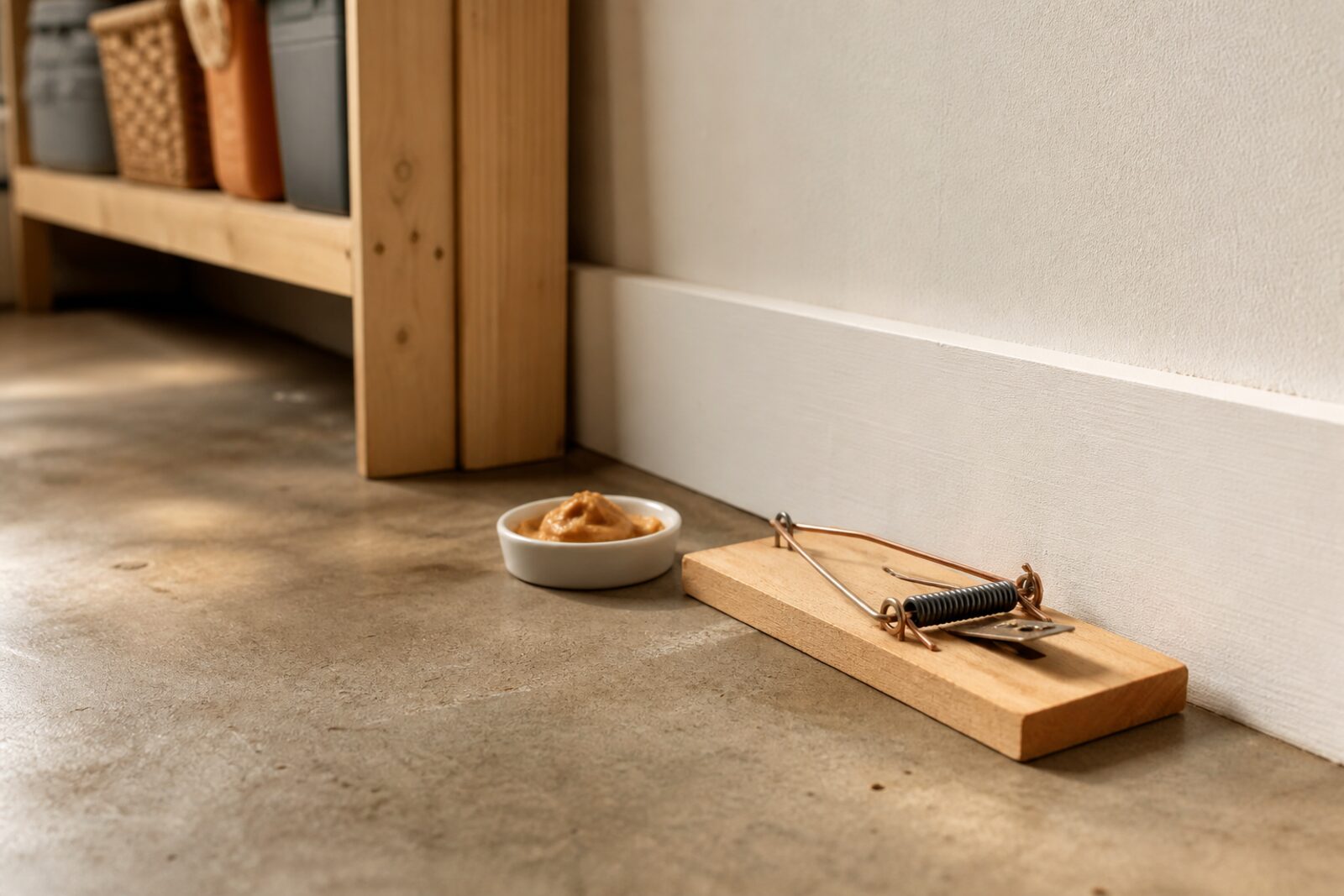
Mice hug edges — baseboards, behind appliances, under cabinet toe-kicks. A trap flush against a wall, trigger facing the surface, gets triggered far more often than one in the open. Look for droppings or a greasy rub mark and place traps on that path.
Bait that actually works
Peanut butter is the standard recommendation — its smell carries, and a small amount forces the mouse to work at it. Chocolate, bacon, or cotton also work, especially in colder months. Avoid a large glob; it lets a mouse nibble without triggering the trap.
How many traps to use
Guidance recommends more traps than most homeowners assume — one every few feet along an active runway, not one per room. Mice are wary of new objects at first, so spreading several improves the odds.
When it's a bigger infestation and a pro makes sense
If traps keep catching mice without activity slowing, droppings appear in multiple rooms, or there's audible activity inside walls, that points to an established colony, not a stray mouse. A pest-control company can inspect for exterior entry points that indoor trapping alone won't fix.
Frequently asked questions
How long does it take for a mouse trap to work?
With traps placed on an active runway and freshly baited, many owners report a catch within one to three nights. An untouched trap after a day or two often just means try moving it a few feet.
What's the best bait for a mouse trap?
Peanut butter, for its scent and sticky texture, which forces a mouse to work at it rather than grab and go. Small amounts beat large ones.
Are glue traps humane?
Not by most definitions from animal welfare groups and pest professionals — a mouse caught on a glue board doesn't die on contact and can struggle before it does. A snap, electronic, or live-catch trap is a better fit if that matters.
Can I use a mouse trap if I have pets or kids?
Yes, but the style matters. Enclosed electronic traps and covered snap traps keep the mechanism out of reach, safer than an exposed spring trap. Bait stations carry real poisoning risk to pets, so keep those outdoors.
Do I need multiple traps, or is one enough?
One is rarely enough once there's confirmed activity. Several traps a few feet apart along the same runway improve the odds, since mice are cautious around a single new object.
Bottom line
For most households, the Victor M325 Metal Pedal Mouse Trap is the best starting point — cheap enough to place several at once, reliable, and simple to reset. Anyone who wants to avoid touching the trigger or the mouse should look to the Tomcat Press 'N Set or the Victor Electronic Mouse Trap, and households set on a non-lethal approach should plan around the Victor Tin Cat and a daily check-and-release routine. Whichever trap fits, placement along the actual runway matters as much as the trap itself.
Our rankings and editorial scores consider product specifications, aggregated owner feedback, availability, drawbacks, and commercial relationships. Compensation may affect inclusion or ordering; scores are our own assessments and are not Amazon or customer ratings. Commercial relationships do not permit unsupported product claims. Read more about how we review.