
This page contains affiliate links. If you buy through them, we may earn a commission at no additional cost to you. Read our affiliate disclosure.
A musty smell, foggy windows, or damp spots on the concrete floor usually mean your basement's humidity is too high — and a dehumidifier is the fastest fix. We compared pint capacity, drainage options, noise, and owner reviews across six of the most widely sold basement dehumidifiers to help you pick the right one for your space.
- hOmeLabs 4,500 Sq. Ft Dehumidifier — Best Overall
- Frigidaire FFAD5033W1 — Best from a Major Appliance Brand
- Midea Cube 50-Pint — Best Smart / Quietest
- GE 50-Pint with Built-In Pump — Best with Pump
- Vremi 50-Pint — Best Budget
- AlorAir Sentinel HD55 — Best for Crawl Spaces
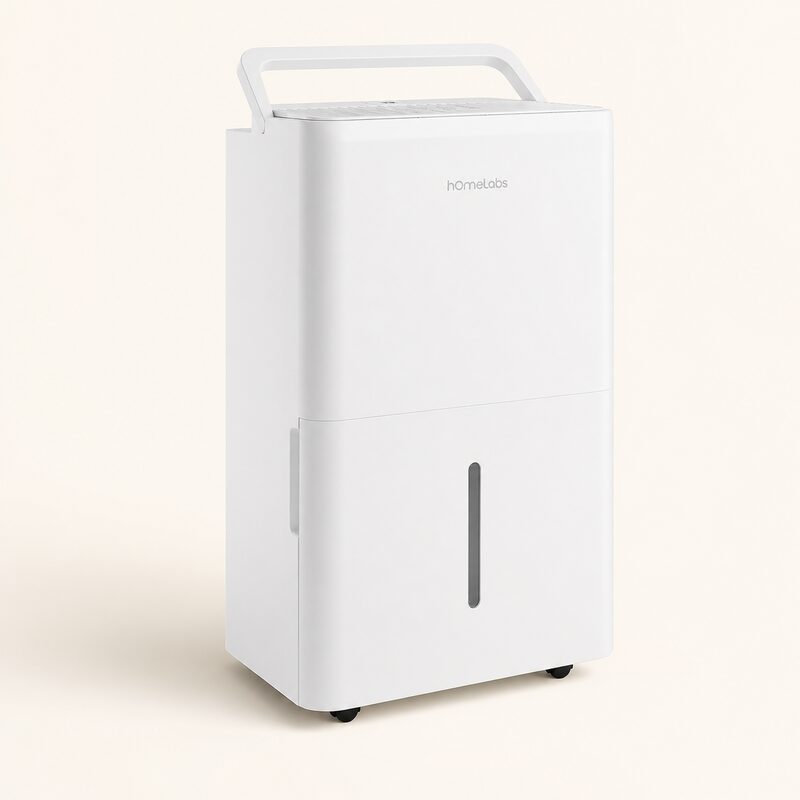
hOmeLabs 4,500 Sq. Ft. Dehumidifier
The hOmeLabs unit removes 50 pints per day under the current 2019 DOE testing standard (equivalent to a 70-pint unit under the old rating) and is rated for spaces up to 4,500 square feet — enough for most single-level basements. A turbofan design pulls air from the front and sides, which owner reviews say cycles a room faster than boxier competitors.
Drainage is flexible: a 1.8-gallon bucket with float shutoff, or a continuous gravity-drain hose to a floor drain positioned lower than the unit. There's no built-in pump for uphill drainage. It's one of the most-reviewed units in this category, so parts and troubleshooting advice are easy to find, and it typically runs $220–$260.
- Auto-restart resumes settings after a power outage
- Washable, reusable filter
- Large owner base makes parts and troubleshooting easy
- No built-in pump for uphill drainage
- Bucket-full sensor reported as overly sensitive by some owners
- Noticeable fan noise on high speed
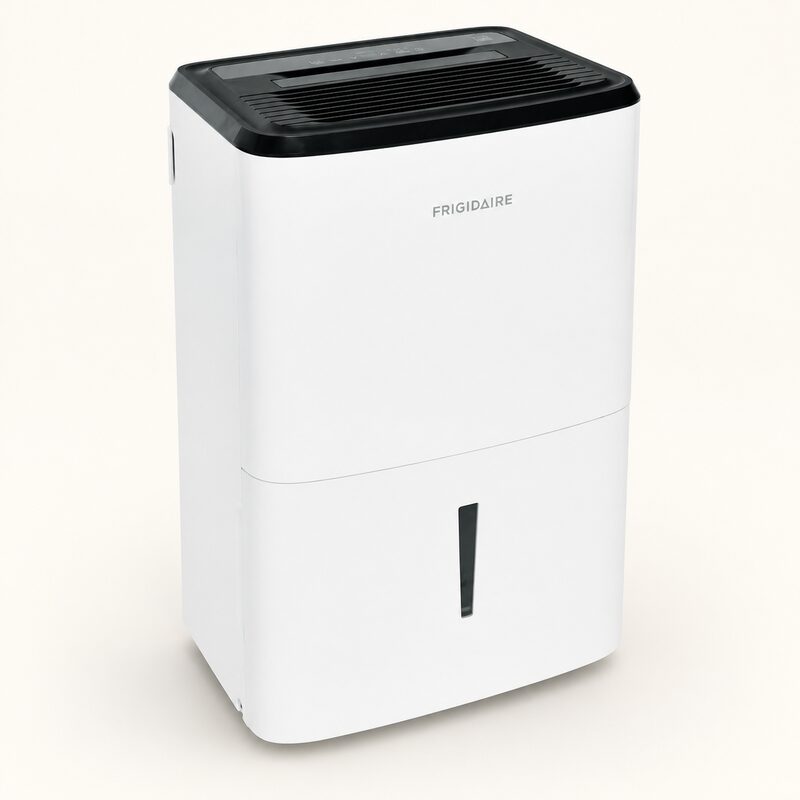
Frigidaire FFAD5033W1
Frigidaire's FFAD5033W1 is a 50-pint (2019 standard) unit built around "Effortless Humidity Control," which lets you set a target percentage instead of guessing at a low/medium/high dial. It's rated to operate down to 41°F, useful in an unheated basement that runs colder than the rest of the house.
It has a top-load bucket and rear drain port for continuous gravity drainage, but no built-in pump, so a drain still needs to sit below the unit. Frigidaire's brand recognition and appliance-service network are a draw for buyers who want local warranty support. Price is similar to the hOmeLabs unit, typically $220–$260.
- Set-a-target humidity control removes dial guesswork
- Rated for low-temperature operation
- Easy-clean filter reduces mold risk inside the unit
- No built-in pump — same uphill-drain limitation as most units this price
- Some owners describe noisy compressor cycling
- A subset of owners report unresponsive control buttons after a year or two
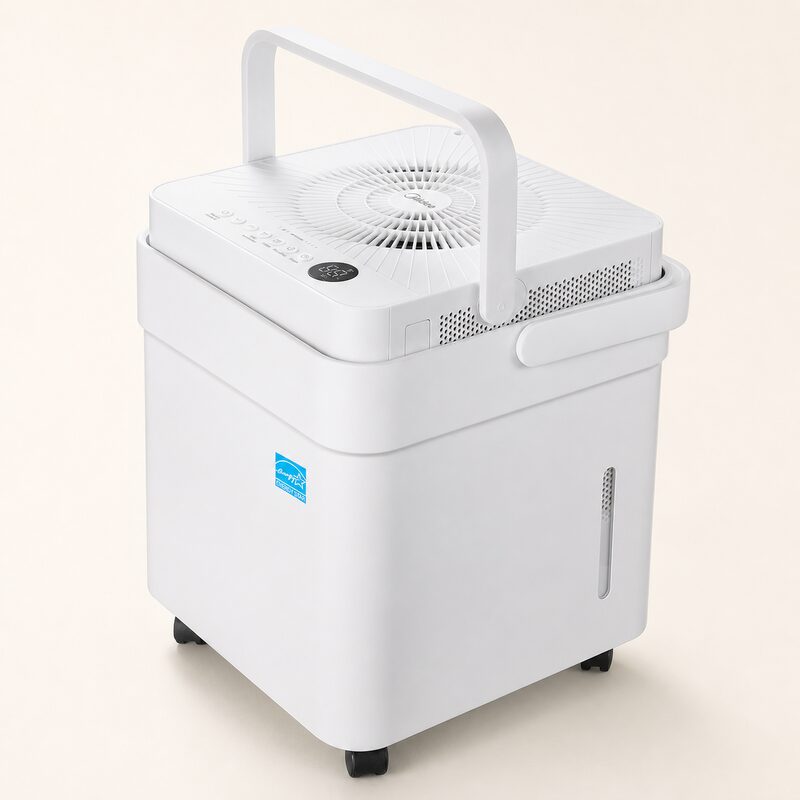
Midea Cube 50-Pint
The Midea Cube is built as a squared-off cabinet that doubles as a side table, a fit for finished basements used as a den or guest space where you don't want a plastic tower in the corner. It removes 50 pints per day (2019 standard) and covers up to 4,500 square feet per Midea's specs.
A variable-speed inverter compressor — instead of the fixed-speed compressors in most budget units — runs noticeably quieter, especially at lower fan settings, according to owner reviews. It connects to the MSmartHome app for scheduling and remote monitoring, and supports continuous drain in addition to its internal bucket. The tradeoff is price: typically $300–$380, well above the other units here.
- Inverter compressor runs quieter and more efficiently
- Cabinet design blends into a finished basement
- App control for scheduling and remote monitoring
- Significantly more expensive than comparable 50-pint units
- Owner reviews report occasional WiFi/app pairing issues
- Smaller bucket capacity relative to its footprint without continuous drain
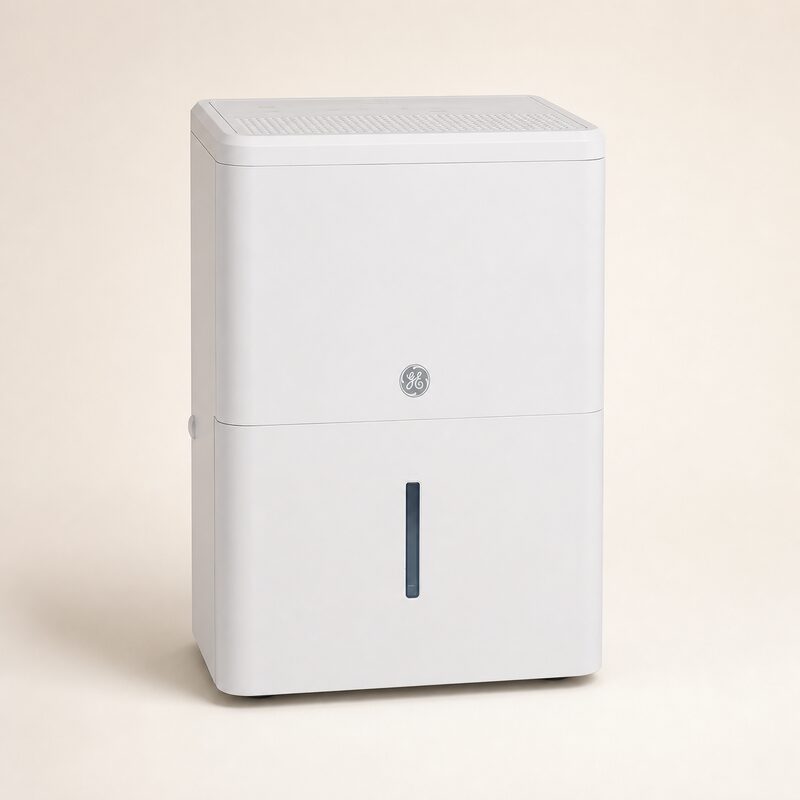
GE 50-Pint Dehumidifier with Built-In Pump
GE's pump-equipped 50-pint model solves the biggest basement annoyance: needing a floor drain below the unit. Its built-in pump pushes collected water several feet vertically and further horizontally, so you can drain up and over to a utility sink or a drain positioned higher than the unit.
It's rated for 50 pints per day (2019 standard), covers up to 4,500 square feet, and still includes a manual bucket if you'd rather skip the hose. It also has a low-temperature mode for cooler basements. The pump is the reason to buy this over a gravity-drain unit, and it adds to the price — typically $280–$320.
- Built-in pump drains uphill, removing the floor-drain requirement
- Same 50-pint / 4,500-sq-ft capacity as full-size gravity-drain units
- Manual bucket still available if you skip the drain line
- Pump cycling adds mechanical noise on top of compressor and fan noise
- A kinked or misrouted pump hose can trigger error codes per owner reports
- Heavier and pricier than non-pump equivalents you may not need
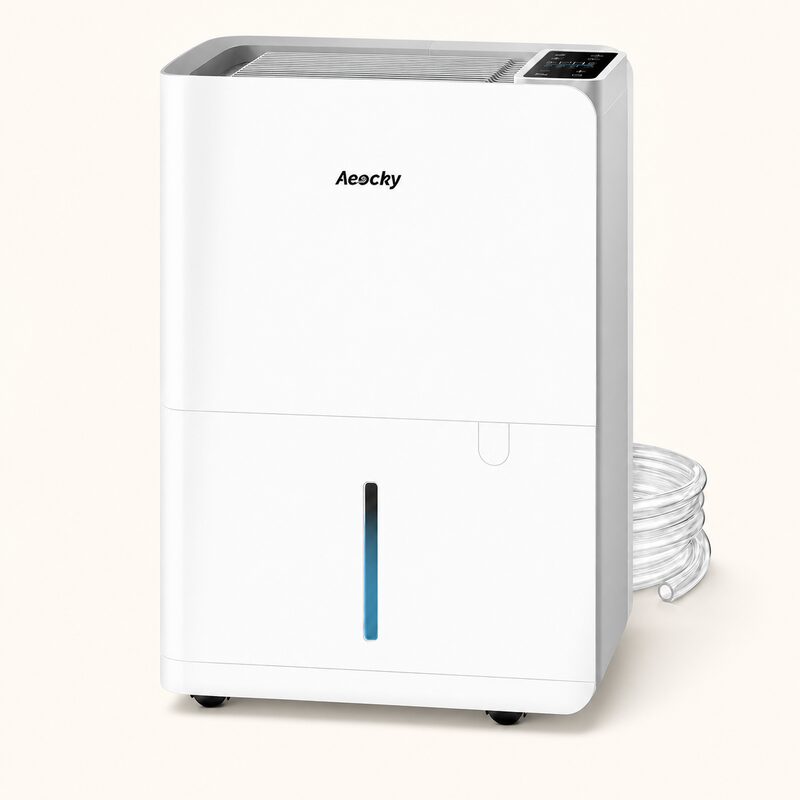
Vremi 50-Pint Dehumidifier
Vremi's 50-pint model matches the DOE-rated capacity of the pricier brands above at a noticeably lower cost, making it a reasonable pick for a smaller basement, a first-time buyer, or a secondary unit for a workshop. It's rated for up to 4,500 square feet, with a digital humidistat, a 24-hour timer, and a continuous-drain hose port alongside its bucket.
It's a no-frills unit — no app, no pump, basic dial-and-button controls — and typically runs $180–$220, the least expensive full-size 50-pint option in this roundup.
- Lowest price of the full-size 50-pint units here
- Continuous drain hose port included
- Simple controls, no app or account required
- Build quality — plastic panels, bucket latch — reported as less sturdy than Frigidaire or GE
- Customer service and warranty follow-through reported as inconsistent by some owners
- Some owners in colder, very damp basements report it struggles compared to name-brand units at the same rating
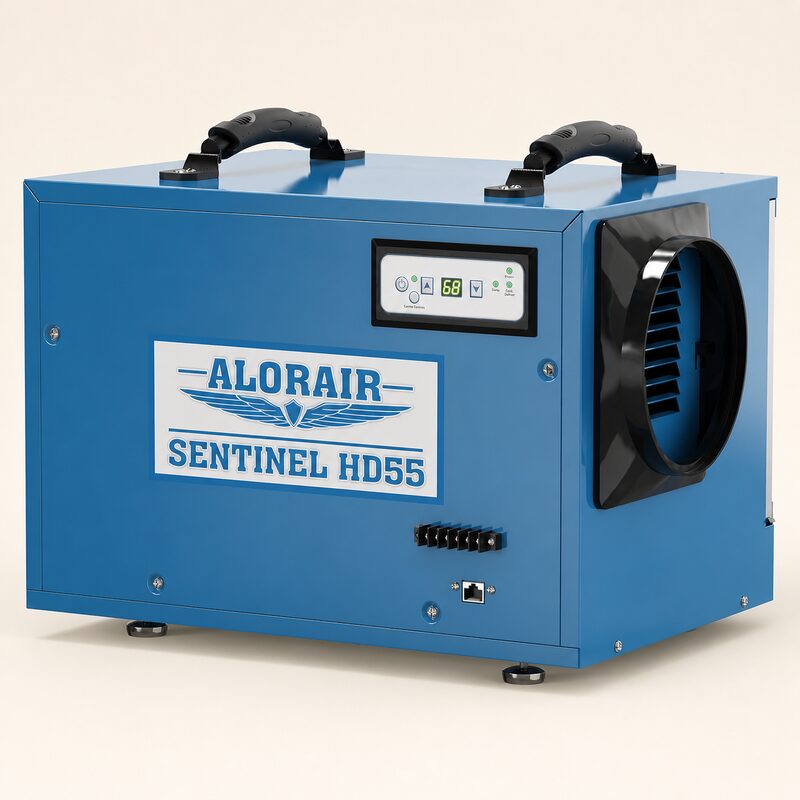
AlorAir Sentinel HD55
The AlorAir Sentinel HD55 is built for environments regular dehumidifiers struggle with: crawl spaces, unfinished basements with dirt floors, and spaces that stay cold year-round. It removes roughly 55 pints per day at AHAM test conditions and is designed for continuous, largely unattended operation rather than being wheeled in and out of living space.
Epoxy-coated coils resist corrosion in high-moisture crawl-space air, a MERV-13 filter helps with air quality, and it's rated to keep working in temperatures as low as the mid-30s°F — well below what standard units handle before their coils ice over. It has a built-in pump and hose ports for permanent installation, and some versions offer WiFi monitoring. This is a commercial-grade unit priced accordingly, typically $500–$650.
- Rated for low temperatures well beyond standard basement units
- Epoxy-coated coils and MERV-13 filtration suited to crawl-space conditions
- Built-in pump and permanent-installation hose ports
- Significantly more expensive than home-use dehumidifiers
- Heavy and bulky — meant to be mounted or set in place, not moved room to room
- Runs louder than home units, which matters if it's near living space
How to choose a basement dehumidifier
Sizing: pints to square footage and dampness level
Since 2019, pint capacity is measured under a revised DOE standard, so a "50-pint" unit today is roughly equivalent to what was labeled 70-pint before the change. Manufacturers publish coverage by dampness level: "moderately damp" (musty smell only in humid weather), "very damp" (persistent smell, damp wall spots), and "wet" (standing moisture). A 50-pint unit rated for 4,500 square feet at "moderately damp" covers less if your basement is genuinely wet — size up rather than down.
Drainage setup: bucket vs. continuous gravity drain vs. pump
A damp basement can fill a bucket more than once a day, and a missed day means the unit sits idle. Continuous gravity drain — a hose to a floor drain or sump pit below the unit's outlet — is worth setting up for most basements. If your only nearby drain sits higher than the unit, you need a pump model or an add-on condensate pump, since gravity alone won't push water uphill.
Low-temperature operation
Basements often run colder than the rest of the house. Standard dehumidifiers can ice over below roughly 65°F, halting moisture removal until a defrost cycle clears the ice. Look for a unit explicitly rated for low-temperature operation if your basement is unheated, and consider a crawl-space-rated unit if temperatures regularly drop into the 30s°F.
Energy use
A 50-pint unit running most of the day is a meaningful draw on your electric bill, especially since a damp basement often needs it running for months at a stretch. ENERGY STAR-certified models use less power per pint removed, and inverter-compressor models like the Midea Cube typically use less power at partial load than fixed-speed compressors.
Humidity target: 30–50%
Most mold-prevention guidance points to keeping indoor relative humidity between 30% and 50%. A basement above 60% is where mold can begin growing within days on cardboard, wood, and drywall. Units with a humidistat let you set a target percentage and have the compressor cycle automatically, rather than running continuously on a fixed "high" setting.
Frequently asked questions
How many pints do I actually need?
Start with square footage and dampness level, not pint rating alone. A small, moderately damp basement under 1,500 square feet can often be handled by a 30-pint unit, while most standard basements — 1,500 to 3,000 square feet, moderately to very damp — do well with a 50-pint unit like the ones above. Larger or genuinely wet basements may need a 50-pint unit plus a second unit in a far corner, or a commercial-grade unit sized for heavy use.
Do I need continuous drain, or is the bucket fine?
If you check the basement daily, a bucket can work for a moderately damp space. For anything wetter, continuous drain is worth setting up — most units accept a standard garden-hose fitting. If there's no drain lower than the unit, a pump model or add-on condensate pump removes that constraint.
Can these run in a basement that gets cold in winter?
Not all of them equally well. Rated minimum operating temperature varies by model, and coil icing is a common complaint in reviews of units used in unheated basements. If your basement regularly sits below the mid-40s°F, prioritize a model rated for low-temperature operation or a crawl-space-rated unit.
Will a dehumidifier get rid of the musty smell?
Usually, if the smell comes from ambient humidity rather than an active leak or existing mold colony. Musty odor is typically produced by mold and mildew that thrive above roughly 60% relative humidity; pulling the room to 30–50% removes the conditions they need to keep growing. If the smell persists after several weeks, that points to a moisture source the dehumidifier can't fix alone — a foundation leak, poor outdoor grading, or an existing mold colony needing remediation.
Is a bigger, more expensive unit always better?
No. Oversizing wastes money and can cause a unit to short-cycle — hitting its humidity target and shutting off before it's run long enough to dry the air evenly. Match capacity to your square footage and dampness level first, and treat pumps, apps, and cabinet styling as separate decisions.
Bottom line
For most homeowners dealing with a musty, moderately-to-very-damp basement, the hOmeLabs 4,500 Sq. Ft. Dehumidifier is the strongest overall pick — it hits the 50-pint capacity and coverage most basements need, has a large owner base, and costs less than pump or smart-feature models many basements don't require. Step up to the GE pump model if your drain sits above the unit, and go with the AlorAir Sentinel HD55 for a crawl space or a basement that stays cold and wet no matter what you run.
Our rankings and editorial scores consider product specifications, aggregated owner feedback, availability, drawbacks, and commercial relationships. Compensation may affect inclusion or ordering; scores are our own assessments and are not Amazon or customer ratings. Commercial relationships do not permit unsupported product claims. Read more about how we review.