
This page contains affiliate links. If you buy through them, we may earn a commission at no additional cost to you. Read our affiliate disclosure.
If your vacuum finds tumbleweeds of fur under the couch every week, or you start sneezing the second the cat wanders into the room, the problem usually isn't your cleaning routine — it's what's floating in the air between cleanings. Pet dander is microscopic, litter-box and wet-dog smell cling to fabric, and shed hair clogs standard filters faster than most people expect. We compared specs, filter-replacement costs, and owner reviews across the most popular purifiers sold for pet households to find six that hold up to daily shedding.
- Levoit Core 300S — Best Overall
- Coway Airmega AP-1512HH Mighty — Best for Large Rooms
- Levoit Core P350 Pet Care — Best Budget Pick for Odor
- Winix 5500-2 — Best for Allergies
- Blueair Blue Pure 311i Max — Best Quiet, Compact Option
- Shark HP102 — Best for Whole-Home Coverage
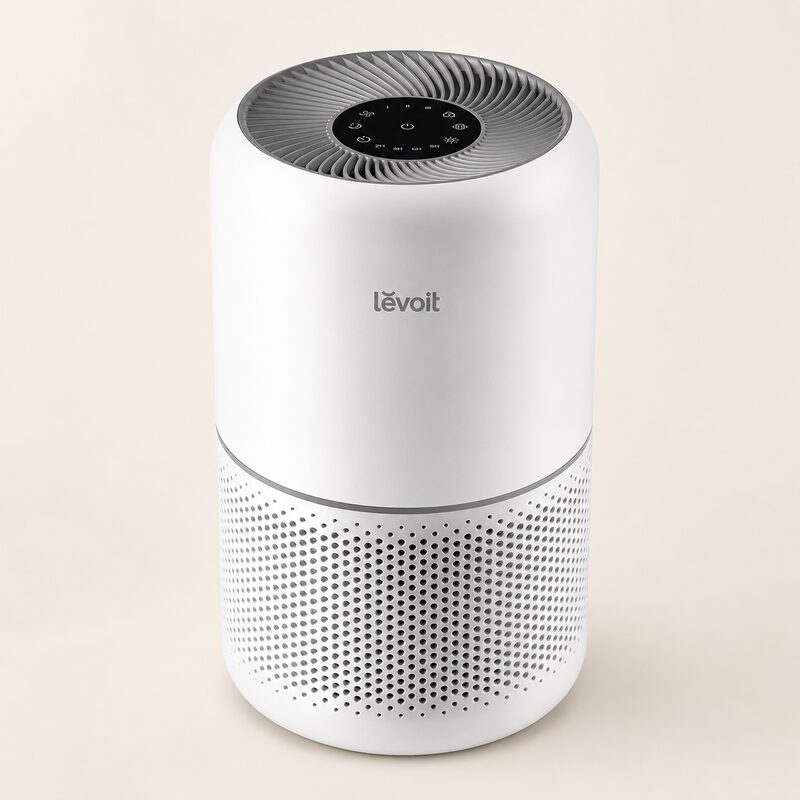
Levoit Core 300S
The Core 300S shows up most often in pet-owner recommendations because it pairs a washable pre-filter with a true three-stage stack — H13 True HEPA plus activated carbon — in a compact tower sized for a bedroom or living room. The pre-filter catches fur before it reaches the HEPA layer, keeping it from matting over and choking airflow.
Owners praise the auto mode: a built-in sensor ramps the fan up when dander spikes and quiets back down. Replacement filters run about $25–$30 and are typically swapped every 6–8 months.
- Washable pre-filter specifically helps with hair and clumped dander
- Quiet on auto mode for a bedroom or office
- Affordable replacement filters compared to premium competitors
- Not sized for large open-concept living rooms or finished basements
- Carbon layer is thin, so it's better at dust than strong litter-box odor
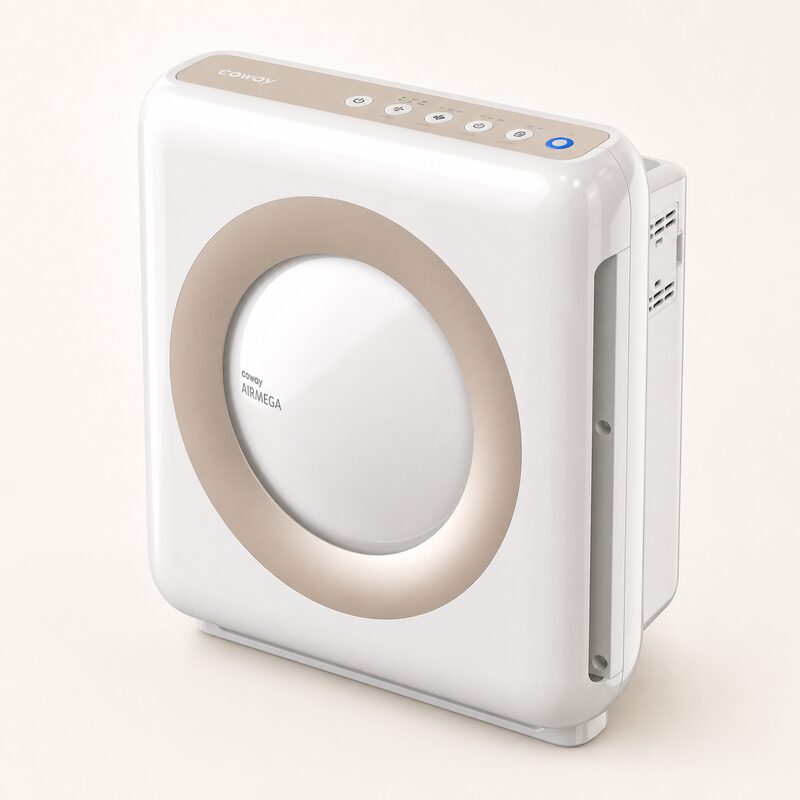
Coway Airmega AP-1512HH Mighty
The Mighty has been a top seller for years, and it's the unit we'd point to for a large living room, open kitchen, or multi-pet household. It pairs True HEPA with an activated carbon layer and an eco mode that shuts the fan off when no particles are detected. Owners call out the front-facing air quality indicator, which changes color in real time so you can tell at a glance whether the fan needs to run higher after grooming or a litter change.
The single-filter design combines HEPA and carbon in one cartridge, replaced together every 6–12 months at roughly $35–$50. It's a heavier, boxier unit than the towers here — harder for a cat to knock over, less like furniture.
- Strong coverage for large or open-concept rooms
- Combined filter cartridge simplifies replacement scheduling
- Eco mode reduces energy use when air is already clean
- Bulkier footprint than tower-style purifiers
- Replacement filters cost more per swap than budget competitors
- No separate washable pre-filter, so heavy shedding shortens filter life
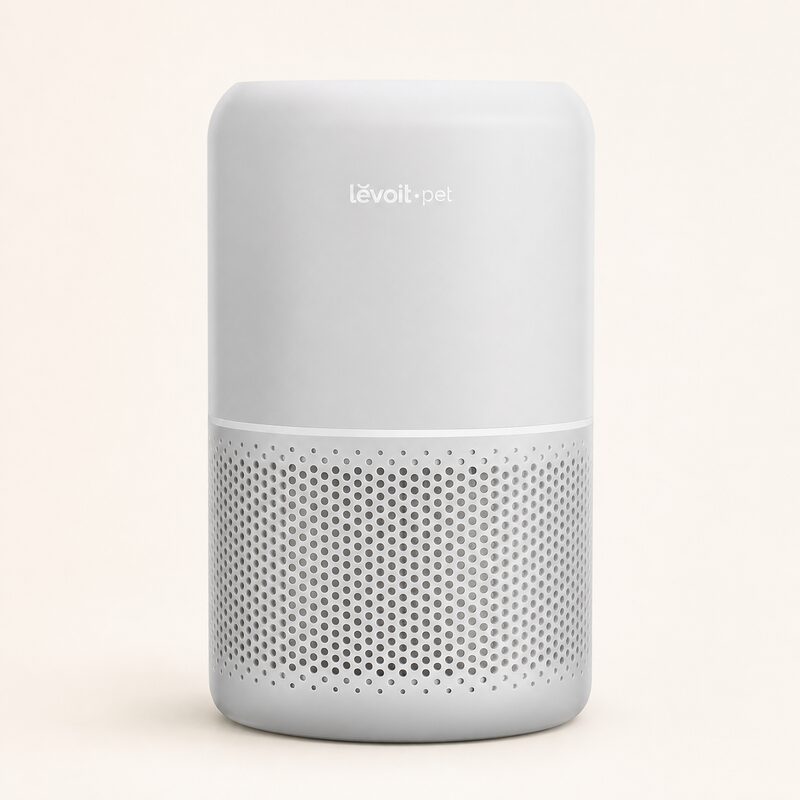
Levoit Core P350 Pet Care
Levoit built the P350 specifically for pet owners: alongside True HEPA, it uses a beefed-up carbon filter aimed at ammonia and litter-box odor rather than just general dust. For anyone whose main complaint is smell — a laundry-room litter box, a dog bed in the corner of the living room — this is the pick engineered for that problem.
It's smaller than the 300S or the Mighty, best suited to a bedroom or laundry room. It undercuts most other pet-specific purifiers on price while still using genuine True HEPA. Filters run about $30 and last roughly 6 months, though the odor-focused carbon layer saturates faster right next to a litter box.
- Carbon filter formulated specifically for pet and litter odor, not just dust
- Lower upfront cost than most pet-specific competitors
- Washable pre-filter for hair
- Small room coverage — not a fit for open floor plans
- Odor-focused carbon filter saturates faster near a litter box, shortening its life
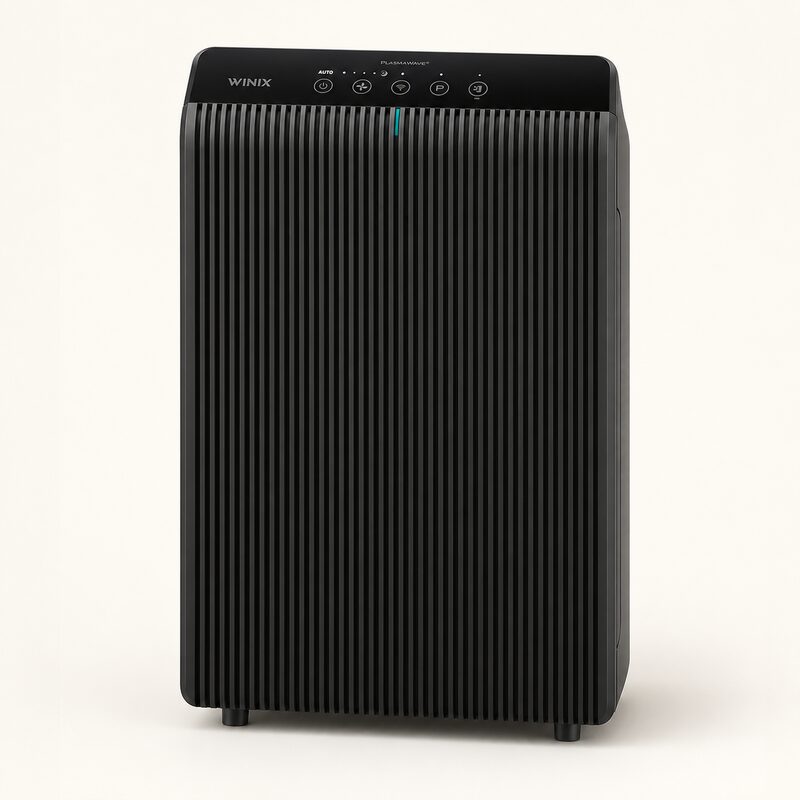
Winix 5500-2
The 5500-2 shows up repeatedly in allergy-forum recommendations because it pairs True HEPA with Winix's PlasmaWave technology, marketed to break down odor and allergen particles rather than just trap them. For people who get itchy eyes or a stuffy nose when a cat or dog is nearby, this is the model that comes up most. PlasmaWave can be switched off if you'd rather run HEPA alone (see the ozone note below).
The washable pre-filter handles pet hair well, and an auto mode dims the display at night. Replacement filters cost around $20–$25, but the carbon filter needs replacing roughly every 3 months with strong pet odor present, while the HEPA filter lasts closer to a year.
- PlasmaWave targets allergens beyond straight HEPA filtration, with an off switch
- Washable pre-filter handles fur well
- Quiet, dimmable display suited to bedrooms
- Carbon filter needs replacing more often than competitors if odor is heavy
- PlasmaWave is an ionizing feature some allergy-sensitive users prefer to run off
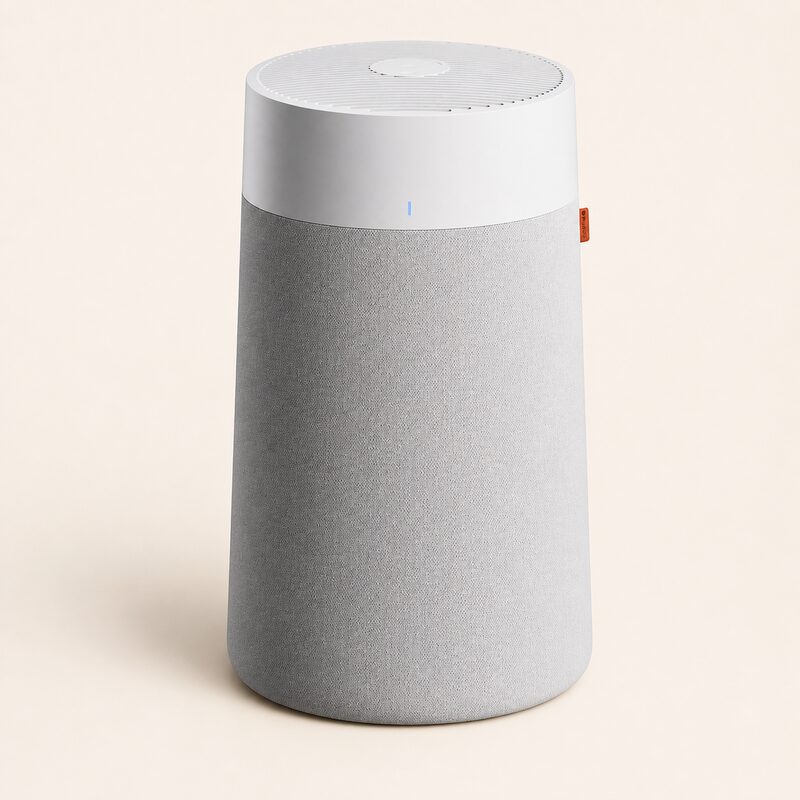
Blueair Blue Pure 311i Max
The 311i Max is built around a washable fabric pre-filter that wraps the entire unit — instead of a small filter panel, the whole outer shell catches hair and is removable and washable in a sink. That design gives it a rounded look that's less "appliance" and more "furniture," which owners frequently mention when explaining why they picked it for a living room.
Underneath is a HEPASilent filter, Blueair's combination of mechanical and electrostatic filtration, plus a separate carbon filter. Owners note it's one of the quieter units in this category at low-to-medium fan speeds. The catch is cost: replacement filters typically run $50–$70 annually, noticeably more than the Levoit or Winix units above.
- Full washable fabric pre-filter is unusually effective at catching hair
- Quieter operation than most competitors at low-to-medium speeds
- Design blends into a living room rather than looking like an appliance
- Highest ongoing filter cost of any unit on this list
- Fabric pre-filter needs manual washing and air-drying, more upkeep than a disposable swap
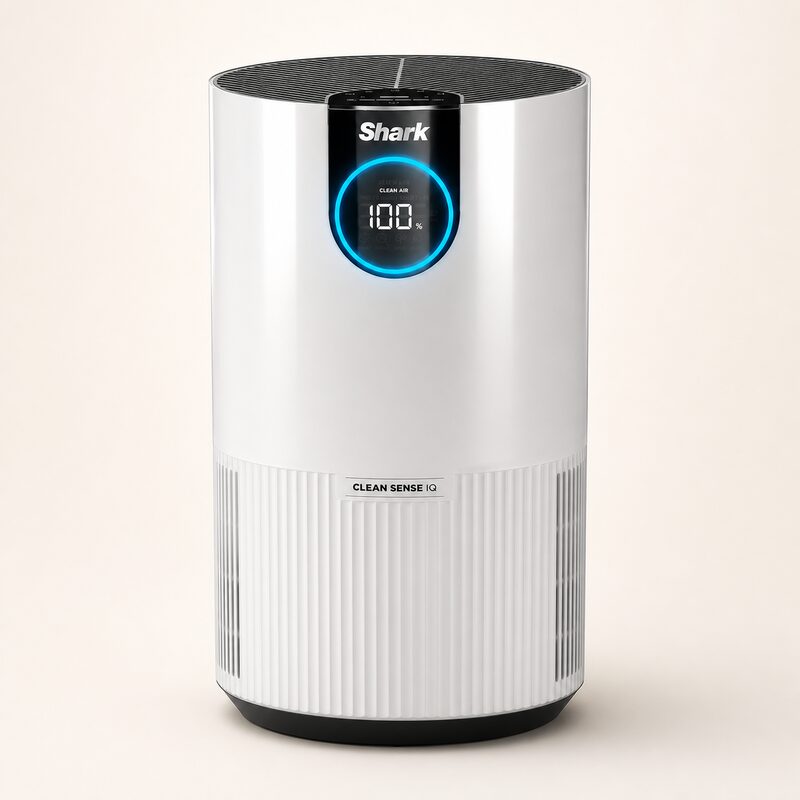
Shark HP102
Shark's purifier doubles as a heater and fan, making it a year-round appliance rather than something stored every spring. The standout feature is the "NeverChange" filter, which Shark designs to last up to five years rather than the 6–12 month cycle common elsewhere on this list — a meaningful difference in long-term cost, even with a higher upfront price.
It combines True HEPA with activated carbon, and the odor-lock mode is what most pet-owner reviews point to for tackling wet-dog smell in larger rooms. Oscillation helps circulate filtered air further than a stationary tower, which is why it's positioned for bigger or open spaces. The tradeoff is size — it's a tall tower closer to a space heater in footprint than a countertop purifier.
- Five-year filter life dramatically lowers long-term replacement cost
- Doubles as a heater/fan, useful in colder months
- Oscillation helps circulate filtered air through larger rooms
- Highest upfront price on this list
- Large floor footprint compared to tower or tabletop purifiers
How to choose an air purifier for pets
HEPA vs. "HEPA-type" — the label that actually matters
True HEPA filters are certified to capture at least 99.97% of particles at 0.3 microns, which covers most pet dander. "HEPA-type" or "HEPA-like" filters are a marketing term for a lower-grade filter that doesn't meet the certified standard — cheaper but noticeably less effective. Every unit on this list uses genuine True HEPA filtration.
CADR and room-size ratings
Clean Air Delivery Rate (CADR) measures how much filtered air a purifier pushes out per minute, and manufacturers use it to set a room-size rating. That rating assumes a fast air exchange rate, so if you have multiple pets or run the fan on low for noise, size up from what the label suggests.
Why the pre-filter matters more than the spec sheet
A standard HEPA filter isn't the first line of defense against clumps of fur — that's the pre-filter's job. A washable pre-filter lets you rinse or vacuum off hair regularly without touching the expensive HEPA cartridge, extending its life. Skipping pre-filter maintenance is the most common reason a purifier seems to "stop working" in a pet household.
Ozone and ionizer features — proceed carefully
Some purifiers include an ionizer or plasma feature, like Winix's PlasmaWave, claimed to neutralize odor and allergen particles beyond mechanical filtration. These can produce trace ozone as a byproduct, a respiratory irritant worth weighing if anyone in the home has asthma. Look for units that let you disable it and run HEPA filtration alone.
Filter replacement schedule and real long-term cost
The sticker price is only part of what you'll spend. Standard HEPA filters in pet households typically need replacing every 6–12 months, and heavy shedding or strong odor can shorten that. Check the replacement cost and interval and multiply it over two or three years — a cheaper unit with expensive, frequent filters can cost more than a pricier one with a longer-lasting filter, as the Shark HP102's five-year filter illustrates.
Frequently asked questions
Will an air purifier actually stop pet hair from floating around?
It captures airborne hair and dander already circulating in the room, but it won't stop shedding at the source or replace vacuuming carpets and furniture. Think of it as reducing what's suspended in the air you breathe, not a substitute for cleaning.
Do I need one purifier per room, or can one unit cover my whole house?
Purifiers are rated for a specific room size and don't effectively filter an entire house from one location, especially with closed doors and multiple floors. Most pet owners run one unit where the pet spends the most time rather than trying to cover the whole home.
How often should I actually clean the pre-filter?
For a household with a shedding dog or cat, rinsing or vacuuming the washable pre-filter every one to two weeks is a reasonable baseline, more often if airflow visibly drops. A clogged pre-filter is the most common reason a purifier seems to lose effectiveness over time.
Are ionizer or PlasmaWave features safe to leave on all the time?
These can produce trace ozone, a lung irritant in higher concentrations. If no one in the household has asthma or respiratory sensitivity, most people run them without issue, but anyone concerned should use the off switch and rely on HEPA filtration alone.
Bottom line
For most pet owners, the Levoit Core 300S is the best starting point — genuine True HEPA, a washable pre-filter that actually deals with shed hair, and a price that doesn't punish you for buying two if you need coverage in more than one room. If litter-box or wet-dog odor is the specific complaint, spend a bit more on the Levoit Core P350 Pet Care, or step up to the Shark HP102 if you're covering a larger space and want to avoid buying filters every few months.
Our rankings and editorial scores consider product specifications, aggregated owner feedback, availability, drawbacks, and commercial relationships. Compensation may affect inclusion or ordering; scores are our own assessments and are not Amazon or customer ratings. Commercial relationships do not permit unsupported product claims. Read more about how we review.